What is Council Tax in the UK?
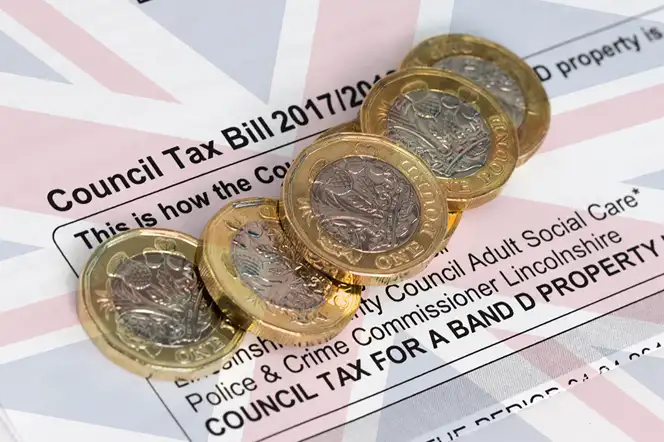
Council Tax is a local tax charged on most residential properties in England, Scotland, and Wales to help fund local services such as rubbish collection, policing, fire services, and social care. If you’re a US expat living in the UK, you’ll generally pay the same Council Tax as everyone else, although it usually doesn’t provide a US tax credit or personal tax deduction.
Key takeaways
- Council Tax is a local tax on residential properties, not a tax on income.
- Most people who rent or own a home in England, Scotland, or Wales are responsible for paying Council Tax.
- The amount depends on your property’s valuation band and the rates set by your local council.
- Many households qualify for discounts or exemptions. These include homes with only one countable adult and properties occupied entirely by qualifying full-time students.
- Council Tax is generally not eligible for the US Foreign Tax Credit and isn’t usually deductible on a US tax return for a personal residence.
- Northern Ireland does not use Council Tax. Instead, domestic properties are subject to a separate rates system.
Last updated August 10, 2026
Written by: Clark Stott
In this article
What is Council Tax?
Council Tax is a local charge collected by councils to fund essential public services in the community where you live. Unlike income tax, which is based on how much you earn, Council Tax is linked primarily to your home. Every eligible residential property falls into a valuation band, and your local authority determines how much each band pays each year.
The revenue helps support a wide range of local services, including:
- Household waste and recycling collection
- Local road maintenance
- Public libraries
- Parks and community facilities
- Adult social care
- Children’s services
- Fire and rescue services
- Police services (through local policing precepts)
- Local planning and environmental health
For US expats, one point is worth emphasizing early: your nationality doesn’t affect whether you pay Council Tax. If you’re liable under UK local government rules, you’re generally treated the same as any other resident.
Important: Council Tax applies throughout England, Scotland, and Wales. Northern Ireland operates under a different domestic rates system rather than Council Tax.
Who pays Council Tax?
Council Tax liability normally follows a statutory hierarchy. A resident owner usually takes priority, followed by a resident tenant, resident licensee and another resident. If nobody lives in the property, the owner is usually responsible.
Many newcomers assume homeowners always pay the bill. In reality, liability depends on who occupies the property, not simply who owns it.
Common Council Tax liability scenarios
|
Situation |
Who usually pays? |
|
You own and live in your home |
The homeowner |
|
You rent an entire property |
The tenant |
|
Spouses or civil partners who live together |
Usually jointly liable |
|
Several unrelated adults who rent together |
Usually jointly liable |
|
Property is empty |
Often the owner |
There are some exceptions. For example, the owner may have to pay Council Tax instead of the person living in the property. This can happen with some shared houses, care homes, or properties where people rent individual rooms. The exact rules depend on the property and the tenancy agreement.
What this means for US expats
If you’ve recently moved from the United States, don’t assume Council Tax works like American property taxes. Checking who is responsible before signing a lease can prevent confusion later. While landlords sometimes include Council Tax within the rent, many do not.
How is Council Tax calculated?
Council Tax is calculated using your property’s valuation band together with the rates set by your local authority. Once a property’s band has been established, the local authority determines how much each band will pay during the financial year. Those rates vary considerably because every council has different funding needs and budgets.
As a result, two homes in the same valuation band can still have different Council Tax bills if they’re located in different council areas.
This is why searching for “average Council Tax in the UK” can be misleading. National averages provide useful context, but your actual bill depends primarily on where you live and your property’s band, not the UK average.
Council Tax discounts and exemptions
Many households qualify for Council Tax discounts or exemptions, but they’re not always applied automatically. Depending on your circumstances, you may be able to reduce your Council Tax bill or, in some cases, avoid paying it altogether.
Eligibility is based on factors such as who lives in the property, whether anyone is a student or has a disability, and your household income.
Here are some of the most common forms of Council Tax relief:
- Single person discount: If you are the only adult counted for Council Tax purposes, you can usually receive a 25% discount. This can apply even when you live with someone who is disregarded under the Council Tax rules.
- Full-time student exemption: If everyone living in the property is a qualifying full-time student, the property is generally exempt from Council Tax.
- If a student lives with one non-student adult, the student usually doesn’t count when calculating the bill. This often means the non-student can claim the 25% Single Person Discount.
- Most councils require proof of student status from the educational institution before applying the exemption or discount.
- Disabled Band Reduction Scheme: Some households may qualify for a lower Council Tax bill if the property has been adapted to meet the needs of a disabled resident. If approved, the property is generally charged at the rate for the band below its current valuation band.
- Council Tax Reduction: Council Tax Reduction (sometimes called Council Tax Support) is designed for people on lower incomes. Unlike some national tax rules, Council Tax Reduction isn’t identical across every council. Two households with similar circumstances may receive different levels of support depending on where they live.
Paying Council Tax: deadlines, payment methods, and missed payments
Council Tax is usually paid in monthly instalments, although many councils also allow annual or other payment arrangements. In England, the annual bill is usually divided into 10 monthly instalments, although you can ask to spread it over 12 months. Payment arrangements differ by council, so always follow the dates shown on your bill.
After moving into a property, your local council will normally send you a Council Tax bill explaining:
- how much you owe
- when payments are due
- available payment methods
- how to report changes to your circumstances
Most people choose to pay by Direct Debit because it’s automatic and reduces the chance of missing a payment. However, councils often accept bank transfers, online payments, debit cards, and other methods.
If you move house, don’t assume your Council Tax account updates automatically. You’ll normally need to tell both your old council and your new council about the move to ensure you’re billed correctly.
What happens if I miss a Council Tax payment?
Missing a payment doesn’t usually lead to immediate enforcement action, but ignoring Council Tax bills can become expensive.
The process generally follows these steps:
- You miss a payment.
- The council sends a reminder notice.
- Continued non-payment may result in a final notice requiring payment.
- The council can apply for a liability order through the courts.
- If the debt remains unpaid, additional enforcement action may follow.
Depending on the circumstances, enforcement can include deductions from earnings or benefits, enforcement agents (sometimes called bailiffs), or other recovery methods permitted under the law.
If you’re struggling to pay, contacting the council early is usually a much better option than waiting until recovery action begins. Many councils can discuss payment arrangements before the situation becomes more serious.
Council Tax for US expats
Many Americans assume Council Tax only applies to UK citizens or permanent residents. In reality, liability is based on your living arrangements and the property you occupy, not your nationality.
Whether you’re in the UK on a work assignment, have relocated permanently, or hold dual US-UK citizenship, you’ll usually be responsible for Council Tax if you’re liable under local council rules.
Here are a few common scenarios:
|
Your situation |
Will you usually pay Council Tax? |
|
Renting a flat or house |
Usually yes. The statutory liability rules determine who owes the council. A landlord may agree to pay Council Tax or include it in the rent, but this does not necessarily transfer legal liability. |
|
Buying a home |
Yes. You’ll generally become responsible from the date you take ownership and move in. |
|
Living alone |
Usually yes, but you may qualify for the 25% Single Person Discount. |
|
Living with a spouse or partner |
Usually yes, and you’ll normally be jointly responsible for the bill. |
|
Living in student accommodation |
It depends. Qualifying student properties may be exempt. |
If you’re unsure who is responsible for the bill, check your tenancy agreement or contact your local council before assuming the landlord is paying it.
Another common misconception is that Council Tax is connected to your immigration status or UK tax residence. It isn’t. Even if you’re only living in the UK temporarily, you may still need to pay Council Tax while you occupy a property. However, special rules may apply to diplomats, visiting forces and certain international-organisation personnel.
Does Council Tax affect your US tax return?
For most US expats, Council Tax doesn’t reduce your US federal income tax. It generally isn’t eligible for the Foreign Tax Credit and isn’t deductible as a personal real estate tax.
The Foreign Tax Credit (FTC) is designed to reduce double taxation on foreign income taxes. Council Tax isn’t an income tax; it’s a local household tax used to fund public services. As a result, it generally doesn’t qualify for the Foreign Tax Credit.
Likewise, if you own and live in your UK home, Council Tax is generally not deductible as a personal real estate tax on your US federal income tax return. The IRS specifically excludes foreign real estate taxes from the itemized deduction available for qualifying US state and local property taxes.
What if I own a UK rental property?
If you own a property that’s rented to tenants, the treatment can be different. Where the landlord is responsible for paying Council Tax as part of operating the rental property, the cost may be deductible as a rental expense on your US tax return, provided it meets the normal IRS rules for rental property expenses.
For example, this could arise if:
- the tenancy agreement requires the landlord to pay Council Tax
- the property is temporarily vacant, and the landlord remains responsible for the bill
- the property is genuinely held and used to produce rental income
The deduction isn’t available simply because you own the property. Whether Council Tax is deductible depends on why it was paid and how the property is being used.
If the property is partly for personal use and partly rented out, you may need to allocate expenses between personal and rental use. Because every rental arrangement is different, it’s worth discussing the treatment with a US expat tax advisor before claiming the expense.
Common Council Tax mistakes US expats make
Many Council Tax problems are easy to avoid once you understand how the system works. If you’re moving to the UK for the first time, these are some of the most common mistakes to watch for.
Assuming the landlord always pays
In many rental properties, the tenant (not the landlord) is responsible for Council Tax. Before signing a tenancy agreement, check who is liable for the bill and whether it’s included in your rent.
Missing out on available discounts
If you’re the only adult living in your home, you may qualify for the 25% Single Person Discount. Similarly, students and some disabled residents may be eligible for discounts or exemptions. Many councils don’t apply these automatically, so you’ll usually need to submit an application.
Thinking Council Tax is the same as UK income tax
Council Tax is a local household tax based on your property and local council rules. It isn’t calculated from your salary or employment income. As a result, paying UK income tax doesn’t replace your Council Tax obligations.
Believing Council Tax reduces your US tax bill
This is one of the biggest misconceptions among Americans living abroad. Although Council Tax is a tax in the UK, it generally doesn’t qualify for the US Foreign Tax Credit and isn’t usually deductible on a US federal tax return for a personal residence.
Forgetting to tell the council when you move
If you move house, don’t assume your Council Tax account transfers automatically. You’ll usually need to notify your old council that you’ve moved out and register with your new council. Failing to do so can lead to incorrect bills or delays in updating your account.
Frequently Asked Questions
Do all US expats living in the UK have to pay Council Tax?
Not always. Most US expats who rent or own a home will be liable for Council Tax, but some properties qualify for exemptions or discounts. Whether you have to pay depends on the property, who lives there, and your circumstances, not your nationality.
Can I claim Council Tax as a Foreign Tax Credit on my US tax return?
Generally, no. The Foreign Tax Credit applies to qualifying foreign income taxes. Since Council Tax is a local property-based charge rather than an income tax, it doesn’t usually qualify.
Can I deduct Council Tax on my US tax return?
Council Tax is not deductible on Schedule A as foreign real estate tax for a personal home. It may be deductible as an ordinary rental expense when connected with income-producing property. Eligible taxpayers should also consider whether it can be included in the foreign housing calculation on Form 2555.
How do I find my Council Tax band?
In England and Wales, check the official Council Tax band service. In Scotland, use the Scottish Assessors Association portal. Your landlord or letting agent may also know the band, but the official valuation record should be treated as authoritative.
Does everyone in the household have to pay?
Not necessarily. Where more than one adult is liable, responsibility is often joint and several. This means the council can generally pursue any jointly liable person for the full amount if the bill isn’t paid.
Does Northern Ireland charge Council Tax?
No. Northern Ireland doesn’t use the Council Tax system. Instead, homeowners and occupiers pay domestic rates, which operate under different legislation and valuation rules.
What happens if I think my Council Tax band is wrong?
You may be able to challenge the band through the Valuation Office Agency in England or Wales or the relevant Scottish Assessor in Scotland. A review can leave the band unchanged or result in it being increased or decreased, so check comparable properties and the applicable challenge rules before proceeding.
Prefer to talk it through? Schedule your free callback today.


Clark Stott has been with Expat Tax Online since 2015. Being a dual national based in the UK, Clark has unique experience helping US citizens (and Accidental Americans) become tax compliant via the Streamlined Tax Amnesty program. Clark likes to help Americans in the UK keep their tax situations as simple as possible to avoid harsh IRS treatment.