US Saudi tax agreement 2026: US expats in Saudi Arabia
Published on: May 13, 2026
Written by: Clark Stott
In this article
What is the US-Saudi tax agreement signed in 2026?
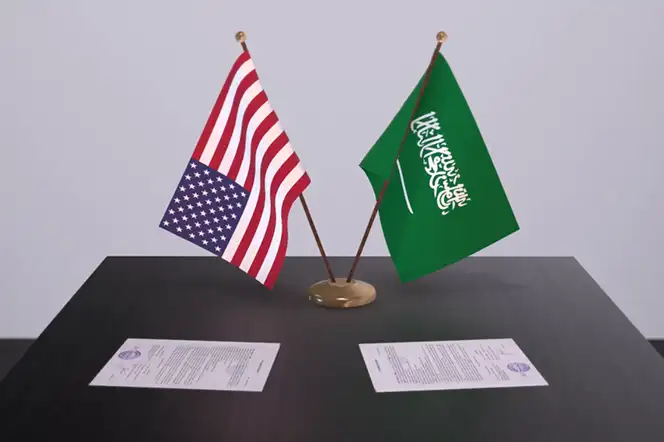
In April 2026, the US and Saudi Arabia signed a new Tax Information Exchange Agreement (TIEA), a formal arrangement that allows both countries to share tax-related financial data to improve compliance and prevent tax evasion.
This agreement does not change your tax rates or eliminate double taxation. What it does is increase visibility, coordination, and enforcement between tax authorities.
If you have Saudi bank accounts, earn income locally, or use foreign structures, this agreement is worth understanding.
What is the US-Saudi tax agreement signed in 2026?
The US-Saudi Tax Information Exchange Agreement allows both countries to share financial information to enforce tax laws, but it does not provide tax relief or reduce your tax liability.
Unlike tax treaties, which often reduce withholding taxes or prevent double taxation, a TIEA focuses on transparency. The agreement, signed in April 2026, allows authorities such as the Internal Revenue Service and the Zakat, Tax and Customs Authority (ZATCA) to request and share information to verify that taxes are reported correctly.
What that means in simple terms:
- Governments can ask each other for financial data
- The data must be relevant to a tax matter
- Requests must follow strict legal procedures
- It can apply to taxable periods beginning on or after January 1 of the third year before the agreement enters into force.
Does the US-Saudi TIEA replace a tax treaty?
No, a TIEA and a tax treaty serve very different purposes. This is one of the most common misconceptions. Here’s a simple comparison between a TIEA and a tax treaty.
TIEA vs Tax treaty
|
Feature |
TIEA (this agreement) |
Tax treaty |
|
Purpose |
Share tax information |
Avoid double taxation |
|
Tax reduction |
No |
Yes |
|
Focus |
Enforcement |
Relief and coordination |
|
Impact on expats |
Indirect |
Direct |
This agreement does not reduce your tax bill. If you were hoping this would eliminate double taxation between the US and Saudi Arabia, you still need to rely on tools like:
Why did the US and Saudi Arabia sign a TIEA?
Global tax systems are moving toward fewer blind spots. Governments want:
- Better tools to detect undeclared income
- More visibility into offshore accounts
- Stronger enforcement across borders
The US already has similar agreements with many countries. Saudi Arabia joining this framework signals a broader shift toward international tax cooperation.
If you already report your income and accounts correctly, this agreement changes very little in your day-to-day life. If not, it raises the stakes.
What financial information can be shared?
Authorities can exchange a wide range of financial information, as long as it is relevant to a tax matter.
Examples include:
- Bank account balances
- Transaction histories
- Investment account details
- Ownership of companies or partnerships
- Trust and foundation structures
Important nuance:
This includes beneficial ownership, meaning the person who actually controls or benefits from the asset, not just the name listed on paper.
This is significant because many tax avoidance strategies rely on layers of ownership. Agreements like this are designed to look through those layers.
What does this mean for US expats living in Saudi Arabia?
It means your financial footprint is more visible than before, but your obligations have not fundamentally changed.
Let’s break it down into real scenarios.
Scenario 1: You have a Saudi bank account
If your total foreign accounts exceed US$10,000 at any point in the year, you are already required to file an FBAR (FinCEN Form 114).
This agreement gives tax authorities a formal way to:
- Verify account information
- Detect discrepancies
But it does not create a new reporting rule. That rule already exists.
Scenario 2: You earn income in Saudi Arabia
As a US citizen, you are taxed on worldwide income. This is because the US taxes its citizens based on citizenship, which the IRS enforces globally.
You may already be using:
- Foreign Earned Income Exclusion
- Foreign Tax Credit
The agreement does not change these tools. What it changes is the ability to verify that your reported income is accurate.
Scenario 3: You use companies or financial structures
If you hold assets through:
- Corporations
- Partnerships
- Trusts
The agreement allows authorities to identify who ultimately owns or controls the assets, which reduces anonymity, especially for complex setups.
Can the IRS access your Saudi bank account?
Yes, but not automatically. Under this agreement, the IRS can request information from Saudi authorities if:
- It relates to a tax investigation
- The request is properly documented
- The information is considered relevant
What this does NOT mean
- The IRS is not monitoring every account in real time
- The TIEA itself is request-based and is not the same as automatic FATCA-style reporting.
What it DOES mean
- If there is a valid reason, information can be obtained
- Requests must meet legal standards
This “foreseeable relevance” standard is important. It prevents fishing expeditions but still allows targeted enforcement.
What should you do as a US expat in Saudi Arabia?
If you’re compliant, this is mostly a reminder to stay organized. If you’re unsure, this is a good time to review your situation.
Practical checklist:
- Review all foreign bank accounts
- Confirm FBAR filing requirements
- Check FATCA thresholds (Form 8938)
- Report all worldwide income on your US return
- Keep documentation for income and taxes paid
Does this agreement change how much tax you pay?
No. The Tax Information Exchange Agreement does not reduce taxes, increase tax rates, or introduce new taxes.
What it does is strengthen information sharing. If you already report everything correctly, your tax outcome remains the same.
When does the agreement take effect and what years does it cover?
The agreement takes effect after formal procedures are completed, but its reach is not limited to future data.
Key timing points
- Applies to requests made after it enters into force
- Can cover information from prior years (typically up to 3 years back)
This retroactive element is standard in agreements like this. It ensures that enforcement is not limited to future activity only.
Frequently Asked Questions
-
Do US expats in Saudi Arabia need to file US taxes even if there is no income tax locally?
Yes. US citizens are taxed based on citizenship, not residency, so you generally need to file a US tax return even if Saudi Arabia does not tax your income if your income is above the filing threshold.
-
Will this agreement increase the chances of IRS audits for expats?
-
Do Americans pay tax in Saudi Arabia?
-
Can a US citizen live permanently in Saudi Arabia?
-
Is Saudi Arabia 0% income tax?
-
Can I work in Saudi Arabia as a US citizen?
Prefer to talk it through? Schedule your free callback today.


Clark Stott has been with Expat Tax Online since 2015. Being a dual national based in the UK, Clark has unique experience helping US citizens (and Accidental Americans) become tax compliant via the Streamlined Tax Amnesty program. Clark likes to help Americans in the UK keep their tax situations as simple as possible to avoid harsh IRS treatment.