IRS COVID penalty refunds after Kwong: Who qualifies?
Some US taxpayers may now qualify for refunds of IRS penalties and related interest connected to filing or payment delays during the COVID-19 disaster period, following the 2025 Kwong v. United States ruling.
The case may extend the deadline for filing refund claims until July 10, 2026, potentially affecting late filing penalties, late payment penalties, interest charges, and certain other IRS assessments tied to the COVID disaster period.
Published on: May 26, 2026
Written by: Clark Stott
In this article
What is the Kwong v. United States case?
Kwong v. United States is a 2025 Court of Federal Claims case concerning IRS penalty refund deadlines during the COVID-19 pandemic. The Court of Federal Claims ruled that certain federal tax deadlines during the COVID-19 disaster period, specifically, January 20, 2020, to July 10, 2023, may have been postponed under Internal Revenue Code Section 7508A.
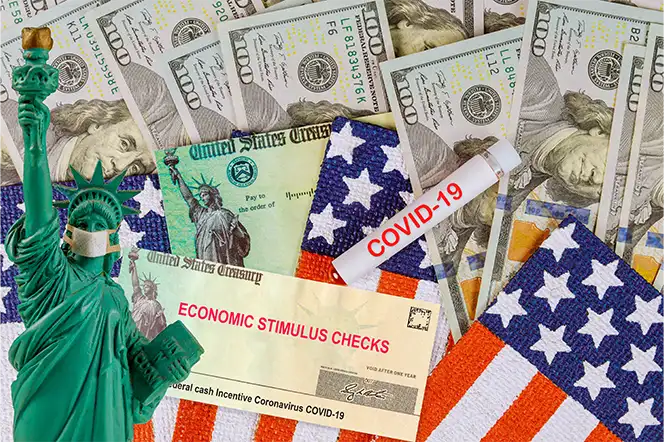
The ruling does not create a new stimulus payment program. Taxpayers are not receiving a new Economic Impact Payment or COVID rebate check. Instead, the case affects the deadline for requesting refunds of certain IRS penalties and related interest.
What is this not?
- This is not a new stimulus check
- This is not an automatic IRS refund
- This is not guaranteed relief
- This is not a blanket refund for every IRS penalty
Why are taxpayers now claiming IRS COVID penalty refunds?
Taxpayers are now claiming IRS COVID penalty refunds because the Kwong v. United States ruling raised the possibility that COVID disaster relief extended the deadline for requesting certain IRS refunds.
Normally, taxpayers only have a limited time to request refunds for IRS penalties or interest. In many cases, the deadline is based on the later of:
- Three years from the tax return filing date, or
- Two years from the date the penalty or tax was paid.
However, the Kwong ruling accepted the position that the COVID disaster period temporarily paused certain normal deadlines for filing refund claims
If that interpretation ultimately holds, some taxpayers who thought their refund window had already expired may still be able to file claims for penalties and interest paid during the pandemic years.
Table 1. COVID disaster relief timeline
|
Date |
Event |
|
Jan. 20, 2020 |
The COVID disaster period begins |
|
May 11, 2023 |
Federal emergency officially ends |
|
July 10, 2023 |
Potential end of the postponed deadline period, 60 days after the federal emergency ended |
|
July 10, 2026 |
Possible refund claim deadline |
Who qualifies for IRS COVID penalty refunds?
Taxpayers who paid certain IRS penalties or interest during the COVID-19 relief period may qualify for refunds. Eligibility depends on:
- When the penalty was assessed
- When it was paid
- The type of penalty involved
- The taxpayer’s filing history
Table 2. Taxpayers who may be affected
|
Taxpayer type |
May qualify? |
|
Individual taxpayers |
Yes |
|
Self-employed taxpayers |
Yes |
|
Small businesses |
Yes |
|
Americans abroad |
Yes |
|
Trusts and estates |
Yes |
The taxpayers most commonly discussed include:
- Taxpayers who filed returns late during the COVID-19 relief period
- Taxpayers who paid failure-to-file penalties
- Taxpayers assessed failure-to-pay penalties
- Self-employed individuals facing estimated tax penalties
- Taxpayers who are dealing with delayed international filings
How do I know if I qualify for a COVID IRS penalty refund?
The fastest way to check possible eligibility is to review your IRS account transcripts and identify penalties or interest tied to filing or payment deadlines during the COVID disaster period.
Who should check their IRS transcript?
You may want to investigate further if these scenarios apply to you:
- You filed a 2020, 2021, or 2022 return late
- You paid failure-to-file or failure-to-pay penalties
- You paid interest connected to late tax payments
- You received penalty notices during or after the COVID years
- You filed several late returns at once
- You live abroad and have had delayed IRS mail or a filing disruption
Which IRS penalties are included in COVID refund claims?
The Kwong ruling has focused primarily on common penalties imposed during the COVID disruption years. The National Taxpayer Advocate has identified several penalties and interest categories that may qualify for refund claims or protective filings.
Table 3. Penalties discussed in COVID-era refund claims
|
Penalty or charge |
Included in current refund discussions? |
|
Failure-to-file penalties |
Yes |
|
Failure-to-pay penalties |
Yes |
|
Estimated tax penalties |
Yes |
|
Interest connected with affected penalties or postponed payment obligations |
Yes |
|
International information return penalties |
Unclear |
International information return penalties
International reporting penalties tied to forms such as Form 5471, Form 3520, and FBAR filings are generally treated differently from ordinary late-filing or late-payment penalties.
These forms may include:
- Form 5471 (foreign companies)
- Form 3520 (foreign trusts and gifts)
- Form 8938 (foreign financial assets under FATCA)
- Form 8865 (foreign partnerships)
- FBAR / FinCEN Form 114 (foreign bank accounts)
The Kwong ruling mainly focuses on penalties tied to regular tax filing and payment deadlines during the COVID disaster period. International reporting penalties often follow different legal rules.
That means taxpayers should avoid assuming every FBAR or foreign reporting penalty automatically qualifies for a refund. It is usually best to have those penalties reviewed separately before filing a refund claim.
Which tax forms are involved in COVID-era IRS penalty refund claims?
The forms most commonly discussed in COVID-era IRS penalty refund claims include Forms 1040, 1120, 1120S, 1065, 940, 941, 943, 944, certain 1099 and 1095 information returns, and potentially some international reporting forms such as Form 8938.
Table 4. Tax forms discussed in COVID-era penalty refund claims
|
Form |
What it is |
Common penalty involved |
|
Form 1040 |
US Individual Income Tax Return |
Failure-to-file, failure-to-pay, estimated tax penalties |
|
Form 1120 |
US Corporation Income Tax Return |
Failure-to-file, failure-to-pay penalties |
|
Form 1120S |
US S Corporation Income Tax Return |
Late filing penalties |
|
Form 1065 |
US Partnership Return |
Partnership late filing penalties |
|
Form 940 |
Employer’s Annual Federal Unemployment (FUTA) Tax Return |
Payroll tax penalties |
|
Form 941 |
Employer’s Quarterly Federal Tax Return |
Payroll tax and deposit penalties |
|
Form 943 |
Employer’s Annual Tax Return for Agricultural Employees |
Payroll-related penalties |
|
Form 944 |
Employer’s Annual Federal Tax Return |
Payroll tax penalties |
|
Form 1099 series |
Information returns for payments to contractors and others |
Information return penalties |
|
Form 1095 series |
Health coverage reporting forms under the ACA |
Information return penalties |
|
Form 8938 |
Statement of Specified Foreign Financial Assets |
International information return penalties |
The forms most often discussed are those with filing, payment, payroll deposit, or information reporting deadlines that may have fallen during the COVID disaster postponement period. Not every penalty connected to these forms is automatically covered by the Kwong ruling.
Can Americans abroad qualify for COVID penalty refunds?
Yes. Some Americans abroad may qualify for refunds involving late-filing penalties, late-payment penalties, or related interest connected to Form 1040 obligations during the COVID years.
Many Americans overseas also experienced delayed IRS correspondence. Some penalty notices arrived months late. Others were sent to outdated addresses while taxpayers were moving between countries during lockdowns.
For example, a taxpayer with little or no US tax liability could still face large penalties for late international reporting forms or delayed filings.
Whether those penalties ultimately qualify depends on the specific facts and procedural posture of the case. Still, Americans abroad should not ignore the Kwong discussion simply because most relief focuses on domestic taxpayers.
How can I claim an IRS COVID penalty refund?
Taxpayers generally need to review penalties, gather records, determine eligibility, and potentially file Form 843 or a protective refund claim before applicable deadlines expire.
Here’s a step-by-step guide to claiming penalty refunds.
Step 1. Review IRS account transcripts
This helps identify:
- Penalty types
- Assessment dates
- Interest charges
- Affected years
Step 2. Identify COVID-era penalties
Focus especially on:
- Failure-to-file penalties
- Failure-to-pay penalties
- Related interest
- Assessments during the COVID relief period
Step 3. Gather supporting records
Collect:
- IRS correspondence
- Proof of payment
- Prior tax filings
- Records explaining COVID-related disruptions
Taxpayers abroad may also want documentation showing international mail delays, travel restrictions, and/or foreign office closures.
Step 4. Review whether Form 843 or a protective claim may apply
Some taxpayers may file direct refund claims immediately. Others may choose protective refund claims while legal developments continue unfolding.
The best filing strategy depends on the taxpayer’s penalty history, payment dates, and procedural timeline.
Step 5. Consider acting before July 10, 2026
Even though the law may continue evolving, many practitioners recommend reviewing eligibility sooner rather than later.
From a procedural standpoint, preserving rights early is often safer than scrambling near a possible statute deadline.
What is Form 843 and why does it matter?
Form 843 is the IRS form commonly used to request refunds or abatements for certain penalties and interest. In most cases, taxpayers should file a separate Form 843 for each tax period and each type of tax, unless the Form 843 instructions clearly allow combining them.
Form 843 allows taxpayers to request:
- Penalty abatement
- Refund claims
- Interest adjustments
- Certain tax corrections
The distinction between a refund and an abatement matters here. If you have already paid the penalty or interest, you are generally requesting a refund. If the IRS assessed the amount, but it remains unpaid, then you can request an abatement instead.
Can Form 843 be filed electronically?
No. Currently, Form 843 generally must be paper-filed. That creates practical concerns, especially for Americans abroad. Because many taxpayers are filing protective claims tied to the July 10, 2026 deadline, mailing records matter more than usual.
Taxpayers should consider using tracked mail, courier services, or certified mail so they can document when the form was mailed. Keeping complete copies of the filing package, including supporting documents and mailing receipts, is also a smart precaution.
What is a protective refund claim?
A protective refund claim helps preserve a taxpayer’s refund rights while courts continue deciding how the Kwong ruling applies.
Because the IRS and Treasury are contesting the ruling, many taxpayers are filing now to preserve their rights rather than waiting for the courts to fully settle the issue.
Note: A protective claim does not guarantee approval. However, it may help taxpayers preserve their right to receive a refund later if the courts ultimately uphold or expand the COVID disaster relief rules.
Are IRS COVID penalty refunds automatic?
No. IRS COVID penalty refunds are generally not automatic, and many taxpayers may need to file Form 843 to preserve potential refund rights before the July 10, 2026, deadline.
Right now, taxpayers may still need to:
- Identify eligible penalties and interest
- Confirm whether refund deadlines still apply
- Prepare supporting documentation
- File refund claims directly with the IRS
The IRS usually requires taxpayers to file formal refund claims when court cases and filing deadlines are involved. You should not assume the IRS will protect your refund rights automatically if you take no action.
What is the July 10, 2026 IRS refund deadline?
July 10, 2026, is generally viewed as the key deadline for many taxpayers to file refund or protective claims tied to the Kwong ruling and COVID-era IRS penalties.
Why the deadline matters
Some taxpayers may prefer to wait for:
- Additional IRS guidance
- Appeals court decisions
- More clarity from future cases
Those concerns are understandable. However, waiting could create problems if the refund deadline expires first. Preserving your refund rights now is safer than waiting for complete certainty that may arrive after the filing window closes.
In other words, some taxpayers are filing protective claims not because the outcome is guaranteed, but because missing the deadline could permanently eliminate the ability to seek a refund later.
Frequently Asked Questions
-
What is the COVID penalty refund?
The COVID penalty refund refers to possible refunds or abatements of certain IRS penalties and related interest charged during the COVID-19 disaster period. The issue follows the Kwong v. United States ruling, which may extend refund-claim deadlines for some taxpayers. Relief is not automatic, and many taxpayers may need to file IRS Form 843 or a protective refund claim by July 10, 2026.
-
Can US expats claim IRS COVID penalty refunds?
-
How do I request an IRS penalty refund?
-
How do I appeal an IRS late filing penalty?
-
Can I file Form 843 abroad?
-
What if I lost my IRS penalty records?
-
What happens if I miss the IRS refund deadline?
Prefer to talk it through? Schedule your free callback today.


Clark Stott has been with Expat Tax Online since 2015. Being a dual national based in the UK, Clark has unique experience helping US citizens (and Accidental Americans) become tax compliant via the Streamlined Tax Amnesty program. Clark likes to help Americans in the UK keep their tax situations as simple as possible to avoid harsh IRS treatment.